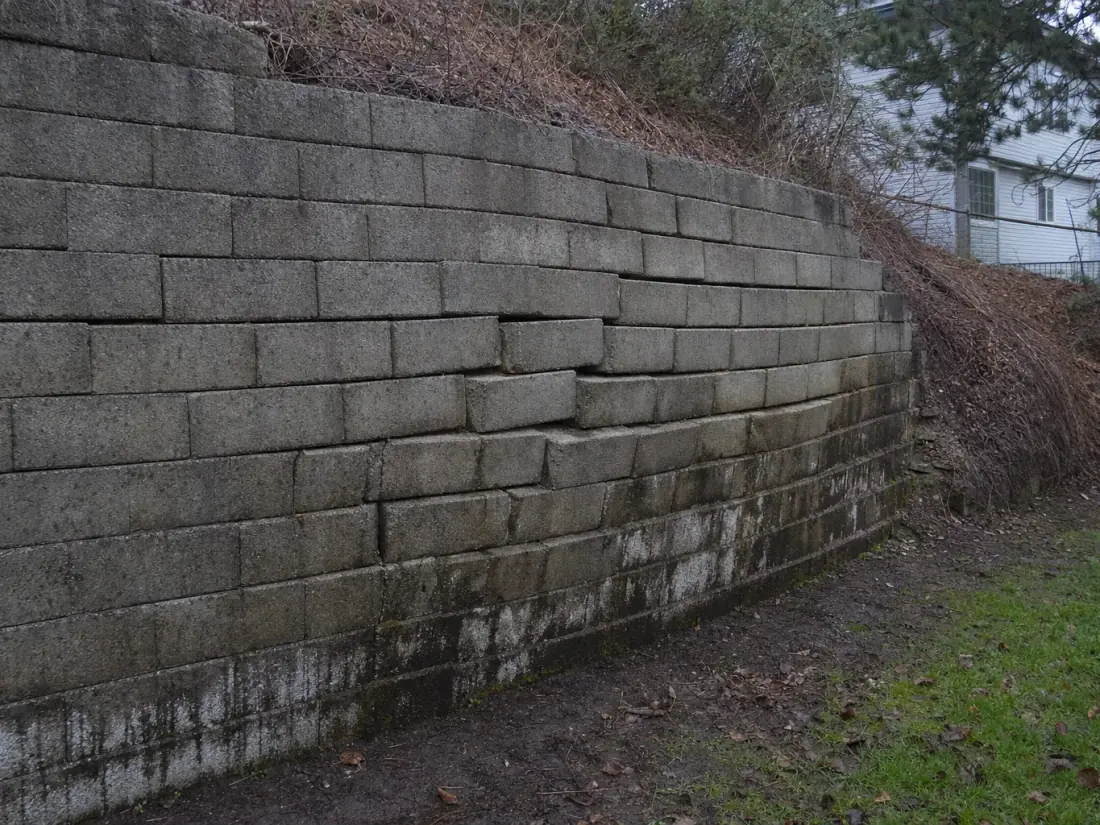
Retaining Wall Repair in Spokane Valley, WA — What to Expect
A wall that is leaning, bulging in the middle or separating at a corner is telling you something specific. Bulging usually means water pressure behind the wall with nowhere to escape. Leaning at the top often means the wall was built without enough reinforcement into the slope. Cracking at a corner can mean the base has settled unevenly.
Repairing the symptom without fixing the cause buys a season or two. We identify the mechanism first, then price the honest repair against a rebuild so you can compare properly.
Sometimes the answer genuinely is a rebuild. When that is the case we will say so rather than sell you a patch.
What Is Included
- Failure mechanism identified before quoting
- Drainage retrofit where water pressure is the cause
- Partial rebuild and re-setting of displaced courses
- Base repair where settlement is the cause
- Repair versus replacement priced side by side
Our Process for Retaining Wall Repair
- 1
Step 1: Failure Diagnosis
We read the movement pattern first. Bulging, leaning, rotation and corner separation each point to different causes, and the repair only works if it addresses the right one.
- 2
Step 2: Drainage and Water Source Check
We look for where water is arriving and whether the wall has any working drainage at all. On the majority of failures this is the finding that matters.
- 3
Step 3: Repair Options Priced Against Rebuild
You get the honest repair and the full rebuild priced side by side, with what each realistically buys you in years, so the comparison is yours to make.
- 4
Step 4: Repair Execution
Depending on the diagnosis this is drainage retrofit, partial dismantling and resetting of displaced courses, base repair, or reinforcement added behind the wall.
- 5
Step 5: Verification and Monitoring Advice
We check the repair holds line and level, and tell you what to watch for so movement starting again is caught early rather than after another winter.
Retaining Wall Repair We Offer in Spokane Valley
Leaning and Rotating Wall Repair
Walls tipping outward at the top, usually from insufficient reinforcement into the slope. Repair means adding what was missing rather than pushing it back.
Bulging and Belly Repair
Outward deflection at mid-height, nearly always hydrostatic pressure. Requires dismantling the affected section, installing drainage and rebuilding.
Cracked and Separated Joint Repair
Vertical cracking or corners pulling apart, generally uneven base settlement underneath. The base has to be addressed before the visible repair.
Drainage Retrofit on Existing Walls
Installing the drainage the wall never had, without full reconstruction. Frequently stops movement for a fraction of rebuild cost.
Why We Are the Retaining Walls Contractor to Call in Spokane Valley, WA
Drainage designed in, not added on
Nearly every failed wall in this region failed because water had nowhere to go. Drainage stone, filter fabric and outlets are part of the design, never an upsell.
We tell you when you need an engineer
Walls over four feet, surcharged walls and tiered walls generally need stamped drawings. We say so up front rather than building something that fails inspection.
Built for freeze-thaw
Inland Northwest winters move soil hard. Base depth, compaction and backfill are specified for frost, not copied from a warm-climate detail.
Written scope before work starts
Wall height, block type, drainage detail, geogrid layout and backfill material, all in writing. You can put it out to competitive bid.
Slope and erosion work, not just walls
Sometimes the right answer is regrading, terracing or planting rather than a taller wall. We will tell you when that is cheaper.
Clean sites, real restoration
Excavation spoil hauled away, access routes protected, and the lawn put back. Wall work is heavy and messy — the cleanup is part of the job.
Retaining Wall Repair FAQs
Is my leaning wall about to collapse?
Not necessarily, but leaning means the wall is losing the argument with the soil behind it and that rarely reverses on its own. If it has moved noticeably in a single season, keep people and vehicles away from the base and get it looked at rather than waiting.
Can a leaning retaining wall be pushed back?
No. Once a block wall has rotated, the courses no longer sit correctly on each other and pushing it back does not restore that. The affected section has to be dismantled and rebuilt, usually with the reinforcement and drainage it lacked.
How much of the wall needs to come apart for a repair?
Only the affected section in most cases, plus a margin either side so the rebuilt part ties properly into what stays. We mark the extent before starting so there are no surprises.
Why does my wall keep failing in the same spot?
Almost always because water concentrates there. A downspout discharging above the wall, a low point collecting surface run-off, or a spring line in the slope will keep attacking the same section regardless of how many times it is rebuilt.
Is it cheaper to repair or replace?
Repair, when the wall is fundamentally sound and the problem is localised or drainage-related. Once a wall has rotated along most of its length or the base has failed, repair becomes throwing money at something that will need replacing anyway.
Other Services in Spokane Valley
- Outdoor Steps and StairwaysStone, block and paver stairways connecting terraced levels on sloped Inland Northwest lots.
- Drainage and GradingYard drainage, French drains and regrading that move water away from walls, patios and foundations.
- Retaining Wall Design and PermittingDesign, drawings and permit submittal handled — including telling you when you do not need a permit.